AB 818 Explained: The Fastest Way to Rebuild on Your Burned Lot in Altadena or Pacific Palisades

Abodu
Bobby Shokri
AB 818 gives modular homes a 10-business-day permit pathway after fires. Learn how Abodu's HCD-approved units get you back on your lot faster than stick-built
California's AB 818, effective January 1, 2026, requires local agencies to approve or deny a complete building permit application for a state-approved modular home within 10 business days during a declared local emergency. For homeowners in Altadena and Pacific Palisades who lost homes in the 2025 fires, this law fundamentally changes the rebuild calculus. When paired with an HCD-approved modular unit from Abodu, AB 818 creates the fastest, most cost-transparent path from burned lot to occupancy available in Southern California today.
The math is straightforward. A conventional stick-built rebuild in Altadena currently takes 2 to 2.5 years from fire to move-in, according to homeowners actively rebuilding there (as of February 2026). A modular unit from an HCD-approved manufacturer, submitted under AB 818's expedited pathway, compresses the permitting phase from months to days, and the factory production timeline runs concurrently with site preparation.
How AB 818 Works for Modular Homes in Fire-Affected Areas
AB 818 (Assembly Member Anamarie Avila Farias) amends the Permit Streamlining Act by adding Section 65946.1 to the Government Code. The law applies when a local emergency has been declared under the California Emergency Services Act, which covers both the Eaton Fire (Altadena) and the Palisades Fire.
Under AB 818, local agencies must approve or deny a complete application within 10 business days for a building permit to construct any of the following structures, provided they are intended for temporary use while the affected property is rebuilt or repaired:
A state-approved or federally approved modular home
A state-approved or federally approved prefabricated home
A detached structure meeting ADU requirements for the affected property
The word "complete" matters. AB 818's 10-business-day clock starts only when the local agency has a complete application in hand. For a conventional stick-built project, assembling a complete application means months of architectural design, structural engineering, civil plans, grading plans, Title 24 energy reports, and potentially geotechnical studies. For an HCD state-approved modular home, the structural and architectural plans are already approved at the state level. The local agency's review is limited to site-specific factors: foundation, utility connections, setback compliance, and zoning conformance.
This is where the real speed advantage lives. Abodu units carry HCD (Housing and Community Development) state approval, meaning the building plans, structural calculations, and Title 24 compliance have already been reviewed and certified by the state. The local jurisdiction does not re-review what the state has already approved. It only inspects the installation on the site, utility hookups, and zoning compliance.
The Legislative Stack: How AB 818, AB 462, and SB 625 Work Together
AB 818 does not operate in isolation. Three laws, enacted in 2025, form an interlocking framework that compresses the entire rebuild timeline for modular housing in fire-affected areas.
AB 818: 10-Business-Day Permit Approval
As described above, this law fast-tracks the building permit for state-approved modular and prefabricated homes. It also requires utility providers to respond in writing within 30 days of receiving a connection request, outlining the next steps in the approval process. This utility coordination requirement is significant. In Altadena, utility uncertainties have been a major source of delay for early rebuilders.
AB 462: Certificate of Occupancy Before Primary Dwelling
Signed as an urgency measure and effective October 10, 2025, AB 462 allows a detached ADU to receive a Certificate of Occupancy before the primary dwelling is rebuilt. All three conditions must be met: the county is subject to a state emergency proclamation on or after February 1, 2025; the primary dwelling was substantially damaged or destroyed by the emergency event; and the ADU has been issued construction permits and passed all required inspections.
For fire-affected homeowners in Los Angeles County, this means an Abodu ADU can be permitted, installed, and occupied while the primary home is still being planned or constructed. Families can return to their property months or even a year before a stick-built primary dwelling would be habitable.
SB 625: 90-Day Ministerial Approval for Disaster Rebuilds
Effective January 1, 2026, SB 625 creates a streamlined 90-day ministerial approval process for housing projects on sites where homes were destroyed by disaster. It also prevents HOAs and CC&Rs from blocking reconstruction of substantially similar structures. For homeowners in Pacific Palisades neighborhoods governed by HOAs, this removes a potential obstruction that could otherwise add months of delay.
Together, these three laws create a pathway where an HCD-approved modular unit can be permitted in 10 business days (AB 818), receive a Certificate of Occupancy independently of the primary dwelling (AB 462), and proceed through a ministerial process that HOAs cannot block (SB 625).
Stick-Built vs. Modular: The Altadena and Pacific Palisades Timeline Comparison
The numbers tell the story.
Stick-Built Rebuild Timeline (Altadena)
Based on data from homeowners and builders currently rebuilding in Altadena (as of February 2026):
Decision-making and design: 2 to 3 months. Architectural plan development: 2 to 4 months. Zoning approval: 2 weeks if well-prepared, potentially longer with corrections. Construction permits: 2 to 4 weeks for initial review, plus additional review cycles. Construction: 12 to 18 months. Total: approximately 20 to 30 months from fire to move-in, assuming no major complications.
Construction costs are running $400 to $550 per square foot, and homeowners report that coordinating separate architects, structural engineers, civil engineers, general contractors, and subcontractors introduces both cost uncertainty and scheduling risk.
Stick-Built Rebuild Timeline (Pacific Palisades)
The City of Los Angeles reports permits are being issued approximately three times faster than pre-fire rates. Still, the average wait between application and permit issuance was 49 days as of January 2026, per the Department of Building and Safety. Construction timelines are comparable to Altadena, and many projects require clearances from more than a dozen city departments.
Over 2,600 residential permits have been issued between Altadena and Pacific Palisades as of early 2026, representing roughly one permit for every five homes lost. Progress is real, but slow.
Modular Rebuild Timeline with Abodu Under AB 818
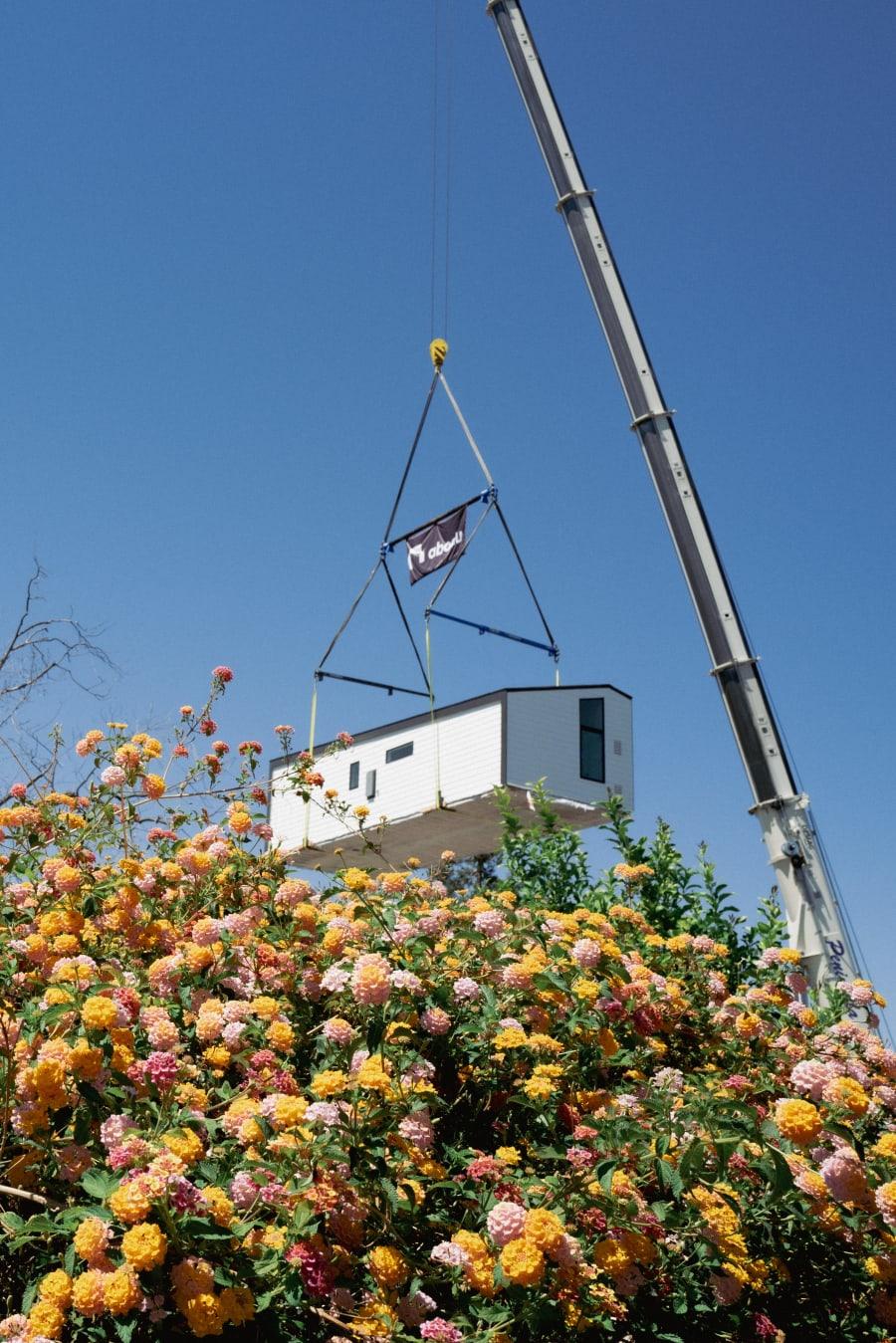
Site assessment and order: 1 to 2 weeks. Permit application submitted with HCD-approved plans: complete application filed with the local agency. AB 818 permit clock: 10 business days for approval or denial. Factory production: runs concurrently with site preparation (foundation, utility connections, lot grading). Delivery and installation: completed in days, not months. Certificate of Occupancy: available immediately for ADU under AB 462, independent of primary dwelling rebuild.
The total timeline from decision to occupancy is measured in months, not years. Factory production is the primary variable, and because it happens simultaneously with site work, it does not add sequential time to the project.
Why HCD State Approval Is the Key to Making AB 818 Work
AB 818's 10-business-day clock applies to "state-approved or federally approved" modular homes. Without state approval, a modular unit would go through the same local plan review process as a stick-built home, and the AB 818 timeline advantage disappears.
Abodu units are approved through HCD's factory-built housing program. This means the building design, structural integrity, electrical systems, plumbing, energy compliance, and fire-resistance ratings have all been reviewed and certified at the state level before a unit ever reaches a homeowner's lot.
When a local building department receives an AB 818 application for an HCD-approved Abodu unit, the scope of review is narrow: verify the foundation design, confirm utility connection plans, and check zoning setbacks. This is why the 10-business-day window is realistic for modular, and why it is effectively impossible for a custom stick-built project, where the local agency must review the entire building design from scratch.
Cost Transparency: What a Modular Rebuild Actually Costs
One of the most common frustrations in fire recovery is cost uncertainty. Stick-built projects routinely experience change orders, material price fluctuations, subcontractor scheduling conflicts, and scope creep. Homeowners rebuilding in Altadena have described the challenge of getting reliable cost estimates when labor demand is high and material prices are volatile.
Abodu's turnkey model addresses this directly. As a single-source provider handling design through installation, the price is established before the project begins. There is no separate architect fee, no general contractor markup on subcontractors, no structural engineering bill that arrives after the fact. The factory-built model means materials are purchased in bulk, construction happens in a controlled environment unaffected by weather or site conditions, and quality control is consistent across every unit.
For homeowners weighing insurance proceeds against rebuild costs, this cost certainty is not a minor advantage. It is the difference between committing to a project with confidence and watching a budget spiral during an already stressful recovery.
Fire-Rated Construction and Insurance Implications
Factory-built modular homes are constructed under controlled conditions with consistent quality oversight. Abodu units are built to fire-rated specifications, which matters directly for insurance underwriting in fire zones.
Following the 2025 fires, many homeowners in Altadena and Pacific Palisades are navigating the complexity of the California FAIR Plan and conventional insurance markets. Insurers assess fire resistance when underwriting policies. A factory-built unit with documented, consistent fire-resistance ratings and materials can present a cleaner risk profile than a site-built home where construction quality varies with weather, crew, and supervision.
Beginning in 2026, updated wildfire building codes are expanding to include properties in "high" hazard categories on California's wildfire maps. In the Eaton Fire area alone, over 500 additional properties will be subject to these stricter codes. Abodu's factory-built units are designed to meet or exceed these requirements.
What This Means for Altadena and Pacific Palisades Homeowners
If you lost your home in the Eaton or Palisades fires, the decision tree is simpler than it appears.
A stick-built rebuild is the right choice if you want a fully custom primary residence and can afford 2 to 2.5 years of displacement, rent payments, and cost variability. Many homeowners are choosing this path, and the county and city have taken real steps to accelerate permitting.
A modular rebuild under AB 818 is the right choice if speed to occupancy, cost certainty, and regulatory simplicity are your priorities. An HCD-approved Abodu ADU can be permitted in 10 business days, built in a factory while your lot is being prepared, and occupied under AB 462 before your primary dwelling is even permitted.
For many families, the optimal strategy is both: install an Abodu ADU on the lot immediately under the AB 818 and AB 462 pathways, move your family back onto your property, and then plan the primary dwelling rebuild from the stability of your own address rather than a rental.
Frequently Asked Questions
Does AB 818 apply to Altadena and Pacific Palisades? Yes. AB 818 applies to any area where a local emergency has been declared under the California Emergency Services Act. Both the Eaton Fire (affecting Altadena) and the Palisades Fire triggered local emergency declarations that qualify.
Can I live in a modular ADU on my lot while my main house is being rebuilt? Yes. Under AB 462, effective October 10, 2025, a detached ADU in a disaster-declared county can receive a Certificate of Occupancy before the primary dwelling. You must meet three conditions: the county is under a state emergency proclamation made on or after February 1, 2025; your primary dwelling was substantially damaged or destroyed; and the ADU has received construction permits and passed all inspections.
How is a modular home different from a manufactured home or mobile home? A modular home is built to the California Building Code (Title 24) and approved by HCD. It is constructed in sections in a factory and assembled on a permanent foundation on site. A manufactured home is built to the federal HUD code and may be placed on a non-permanent foundation. For purposes of AB 818, state-approved modular homes and state-approved prefabricated homes both qualify for the 10-business-day permit pathway.
What does "complete application" mean under AB 818? The 10-business-day clock starts when the local agency has a complete application. For an HCD-approved modular home, this typically includes the HCD approval documentation, site plan, foundation design, and utility connection plans. Because the building design is already state-approved, the application package is significantly simpler than for a stick-built home.
What is the cost difference between stick-built and modular rebuilds? Stick-built rebuilds in Altadena are running $400 to $550 per square foot (as of February 2026), with significant cost variability due to labor demand and material pricing. Abodu provides fixed pricing for its turnkey ADU installations, established before the project begins. Schedule a consultation for a specific quote based on your lot.
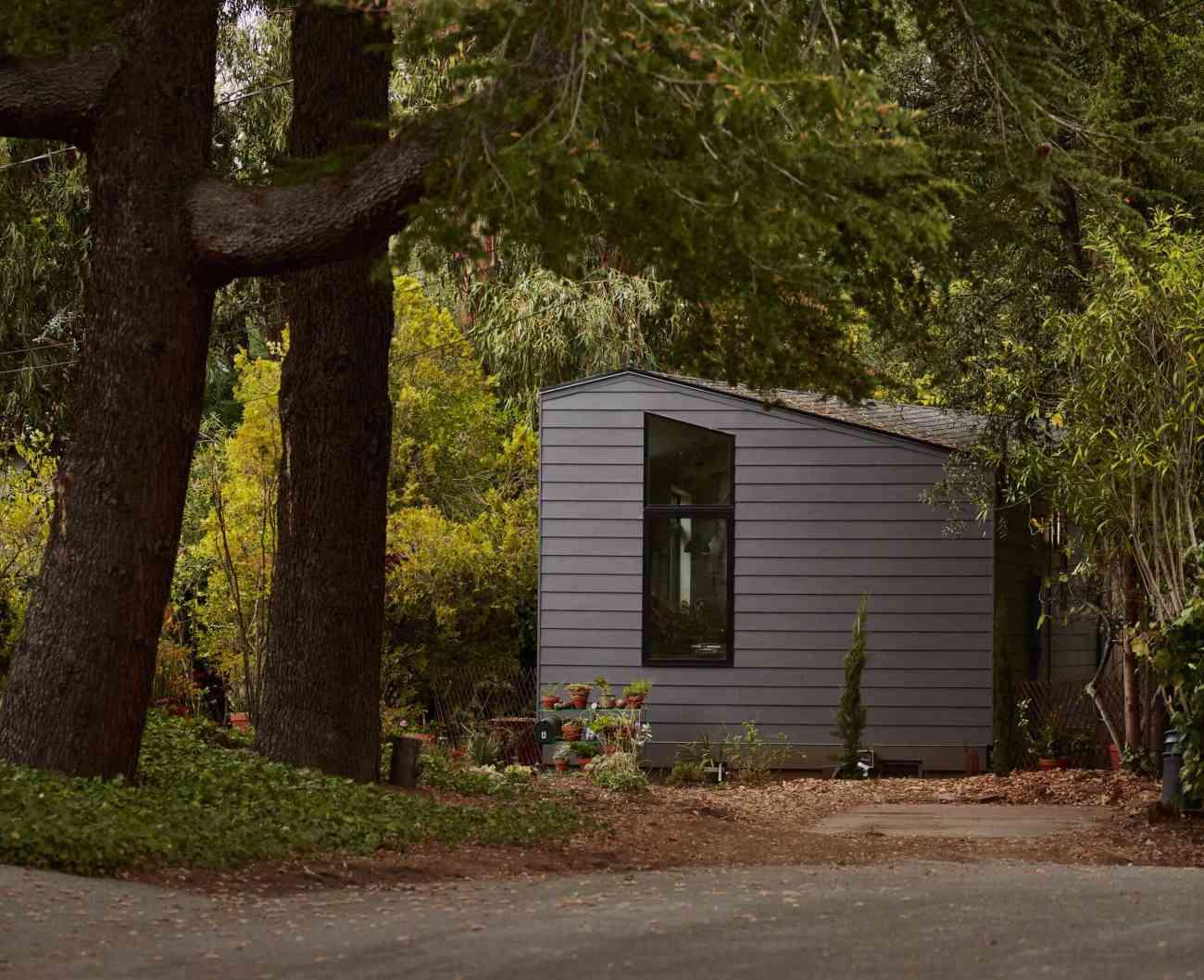
Abodu One in the woods.
Contact Abodu to help you build your ADU in California.

All-in-One Service
Featuring an impressive selection of pre-approved plans, Abodu streamlines the process of building and installing premium built-to-order ADUs.
Unparalleled Design
Each floor plan showcases timeless designs using sustainable, high-quality materials—all with upfront pricing.
Hassle-Free
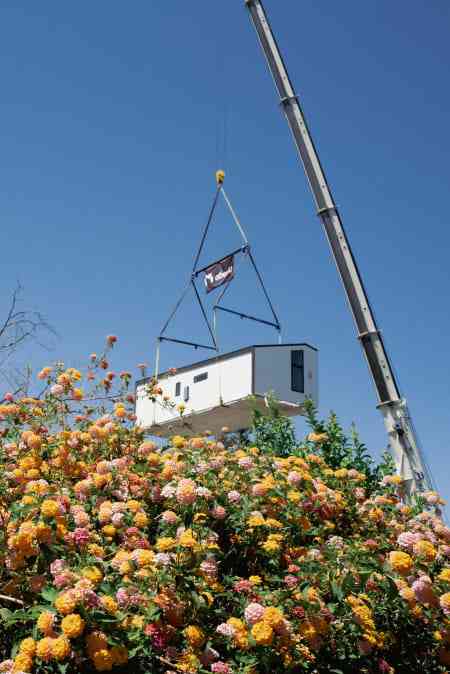
We're committed to delivering a straightforward, hassle-free experience including project management, permitting, and construction. Enjoy your Abodu as soon as nine months after signing on the dotted line.
A Great Investment
Take advantage of an exceptional return on investment with an Abodu ADU.
Get your free ADU assessment.
We'll handle the permits.
Delivered in as little as 6 months.
No hassle installation.
Expand your home’s value and livable space.
Find your new Abodu.