
California's 2026 ADU Laws Explained: Every New Rule That Changes What You Can Build, Where, and How Fast
Every New Rule That Changes What You Can Build, Where, and How Fast
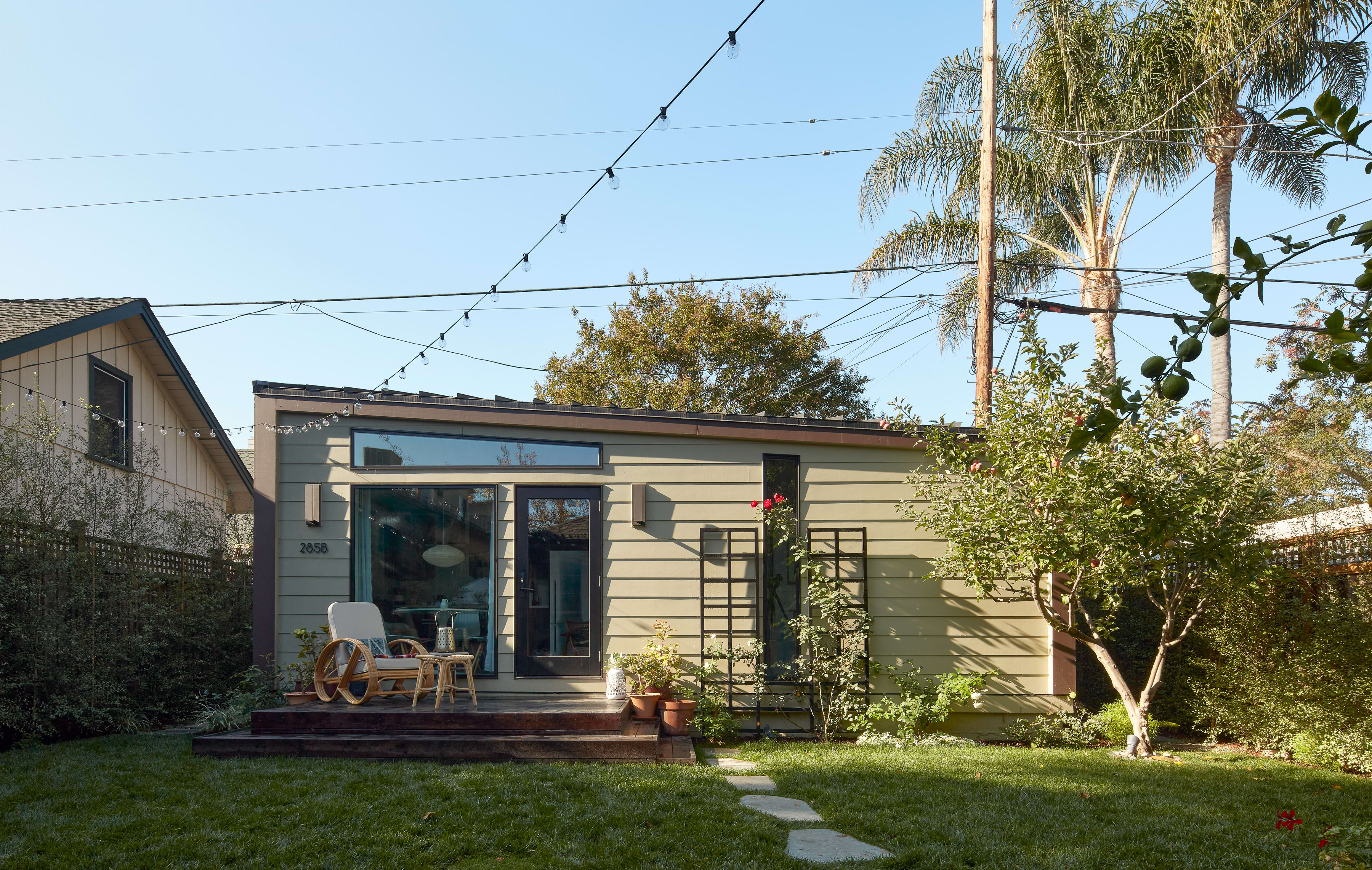
California's 2026 legislative session produced the most significant overhaul of ADU and housing law in years. More than a dozen bills that directly affect ADU permitting, processing, disaster recovery, and enforcement went into effect on January 1, 2026, with a few already active since October 2025. If you're a homeowner, investor, or developer planning an ADU in California, these laws change the rules in your favor, and dramatically so.
This guide covers every law that matters, what each one actually does, and how Abodu's HCD-approved modular process is built to operate inside the new framework from day one.
The ADU-Specific Laws: SB 543, AB 462, SB 9 (2025), and AB 1154
SB 543: The 15-Day Completeness Clock Is Now Law
Before SB 543, local agencies could sit on ADU applications indefinitely, claiming they needed more time to determine whether a submission was "complete." That era is over.
Effective January 1, 2026, SB 543 requires every local agency to issue a completeness determination within 15 days of receiving an ADU application. If they miss that deadline, the application is automatically deemed complete. Local agencies must also provide a written list of any missing items, and on resubmittal, they can only review items they previously flagged. No new objections after the fact.
SB 543 also gives ADU applicants a formal right to appeal an incompleteness determination to the local planning commission or governing body. That right did not previously exist as a statutory matter.
One more practical change: SB 543 clarifies that the 800-square-foot size limit for "state exempt" detached ADUs refers to interior livable space only. Exterior walls and stairs are excluded from the calculation. That is a real increase in usable square footage for a project that falls within this category.
SB 543 also exempts ADUs and JADUs under 500 square feet from school impact fees. For smaller units, this eliminates a cost that previously caught many homeowners off guard.
For Abodu homeowners, SB 543 closes the most common permitting delay tactic: the open-ended incompleteness determination. Abodu submits complete application packages by design, and the 15-day clock now creates accountability if a local agency stalls.
AB 462: You Can Get a Certificate of Occupancy Before Your Primary Home Is Rebuilt
This is one of the most consequential laws for fire-affected homeowners in Southern California, and it took effect on October 15, 2025.
Under prior law, a local agency could not issue a Certificate of Occupancy for a detached ADU until the primary dwelling on the same lot received its own. For homeowners whose primary home burned down, that meant they could not legally occupy a brand-new ADU while waiting for the primary dwelling reconstruction to finish, which can take 18 to 36 months.
AB 462 reverses that rule for any county subject to a state emergency proclamation issued on or after February 1, 2025. In those counties, a local agency must issue a Certificate of Occupancy for a detached ADU if: (1) the primary dwelling was substantially damaged or destroyed in the emergency, and (2) the ADU has received its building permits and passed inspection.
Los Angeles County and Ventura County both qualify. A homeowner can now occupy an Abodu unit on their fire-damaged lot as primary housing while the main house is under reconstruction. This makes the ADU-first strategy viable as a real disaster housing solution, not just a planning concept.
AB 462 also addresses Coastal Zone ADUs separately. Local agencies with a certified Local Coastal Program must now approve or deny Coastal Development Permits for ADUs within 60 days of receiving a complete application, running that review concurrently with the standard ministerial land use review. Agencies without a certified program must notify the Coastal Commission immediately, which then has 60 days to act. If neither the local agency nor the Coastal Commission meets the 60-day deadline, the ADU is deemed approved by operation of law.
SB 9 (2025): Non-Compliant Local ADU Ordinances Are Null and Void
This bill should not be confused with the 2021 SB 9 that created urban lot splits and two-unit development rights. SB 9 (2025) deals specifically with enforcement of state ADU law against noncompliant local ordinances.
Existing law already allowed HCD to review local ADU ordinances and flag deficiencies. But the consequences for non-response were weak. SB 9 (2025) adds teeth: if a local agency fails to submit a new or amended ADU ordinance to HCD within 60 days of adoption, or fails to respond to HCD's deficiency findings within 30 days, that ordinance is null and void as a matter of law.
That means any local rule that conflicts with state ADU law has no legal effect if the agency did not follow proper submission procedures. For homeowners in cities that have tried to impose unlawful restrictions on ADU size, setbacks, or design, SB 9 (2025) gives HCD the mechanism to invalidate those rules directly.
AB 1154: Owner-Occupancy Requirements on JADUs Are Now Limited
Junior ADUs (JADUs) are units of 500 square feet or less located wholly within an existing single-family home. Previously, state law mandated that local agencies require owner-occupancy for JADUs, meaning the property owner had to reside in either the primary dwelling or the JADU.
AB 1154 changes this. Effective January 1, 2026, owner-occupancy requirements on JADUs only apply if the JADU shares sanitation facilities with the primary dwelling. If a JADU is designed with its own private bathroom, local agencies can no longer require the property owner to reside in either the primary dwelling or the JADU.
This opens the door for more flexible rental arrangements on JADU properties, including short-term and medium-term rentals, depending on local rules.
Disaster Recovery Laws: AB 818, SB 625, and the LA Fire Housing Pathway
AB 818: 10 Calendar Days to Permit a Modular Home After a Declared Emergency
AB 818, effective January 1, 2026, amends the Permit Streamlining Act to require cities and counties to approve or deny a complete application within 10 calendar days when the structure is: (1) a state- or federally approved modular home, (2) a state- or federally approved prefabricated home, or (3) a detached ADU, and the structure is intended to house a person until their damaged property is rebuilt or repaired.
The trigger is a declared local emergency under the California Emergency Services Act. Los Angeles County's active emergency declaration satisfies this standard.
Abodu units are HCD state-approved modular homes. They qualify for the 10-day permit clock under AB 818 without question. That means an Abodu homeowner in the LA fire zone can submit a complete permit application and receive approval in less than two weeks. Factory production runs concurrently with lot preparation, meaning occupancy can realistically occur within weeks, not months.
AB 818 also requires utility providers to respond in writing to connection requests within 30 days of receiving them, setting out the next steps in the approval process for utility service. That addresses a secondary bottleneck that has frustrated many homeowners in post-fire recovery.
SB 625: 90-Day Ministerial Approval for Disaster-Destroyed Housing
SB 625 creates a new streamlined ministerial approval process for housing developments on parcels where a residential structure was destroyed or damaged by a disaster, specifically addressing the 2025 Los Angeles wildfires.
Under SB 625, qualifying projects are exempt from local objective zoning, subdivision, and design review standards unless the proposed development exceeds 110 percent of the parcel's pre-disaster residential square footage. Applications must receive a decision within 90 days of submission. If the project is found inconsistent with any applicable standard, the local government must approve on the first resubmission within 60 days, and within 30 days on each subsequent resubmission.
SB 625 also voids any HOA covenant, condition, or restriction that prohibits substantially similar reconstruction of a residential structure destroyed or damaged in a disaster. HOAs cannot block you from rebuilding what was previously there, within defined parameters.
Completeness review under SB 625 must occur within 30 days.
Permitting Reform Laws That Speed Up Every ADU Project
AB 253: Private Plan Checkers Are Now Available to Applicants
For residential projects with 10 or fewer units, AB 253 (effective October 10, 2025) allows permit applicants to hire certified private plan checkers at their own expense if a jurisdiction's estimated review time exceeds 30 business days or if the review is not completed within 30 days.
Once a private plan checker certifies compliance, the local agency has 10 days to either issue the permit or notify the applicant of noncompliance. If the agency does not respond within that 10-day window, the permit is deemed approved.
For ADU applicants stuck in slow-processing jurisdictions, this is a significant new tool.
AB 1308: Final Inspections Must Happen Within 10 Business Days
AB 1308 requires local building departments to complete final inspections of permitted construction within 10 business days after being notified that work is complete. This applies to new residential projects of 10 or fewer units and no taller than 40 feet, which covers virtually every ADU project.
A violation of this 10-business-day inspection deadline is now also a violation of the Housing Accountability Act. That is a meaningful escalation: HAA violations expose agencies to attorney fee awards and escalating fines under AB 712.
AB 920: Centralized Online Permitting Portals Coming to Every Major City
AB 920 requires cities and counties with populations of 150,000 or more to create centralized online portals for housing development project applications by January 1, 2028. These portals must allow online application submission and status tracking. For ADU applicants, this means end-to-end digital processing is coming to every major California city within two years.
Enforcement Laws That Put Teeth Behind the Rules
AB 712: $10,000 Per Unit in Fines for Non-Compliant Agencies
Prior to AB 712, housing applicants who sued to enforce housing reform laws faced uncertainty about recovering attorney fees. AB 712 changes the economics of enforcement entirely.
Courts must now award reasonable attorney fees to housing developers who successfully sue to enforce any housing reform law. The law imposes fines of $10,000 per housing unit, with a minimum of $50,000 per violation for projects with four or fewer units, when an agency violates the law after being warned in writing by the Attorney General or HCD. If the same agency violates the same statute more than once in the same housing element cycle, the fine is multiplied by five.
For ADU applicants facing illegal delays or denials, AB 712 creates a credible legal deterrent. Cities with a history of obstruction now face real financial exposure.
SB 808: Expedited Court Review of Housing Denials
SB 808 dramatically accelerates judicial review of housing development denials. After a denial, the local agency must certify the administrative record within 15 days of being served. The court must set the matter for hearing within 45 days of the petition being filed and render a decision within 30 days of submission.
This collapses the typical 12-to-24-month trial timeline into a process that can conclude in well under 90 days. ADU applicants who receive an improper denial now have a fast path to remedy.
CEQA Reform: The AB 130 Infill Exemption
AB 130 established a powerful new infill CEQA exemption for qualifying housing projects. The exemption eliminates one of the most common delay tools used against infill housing, including many ADU-adjacent projects and primary dwelling rebuilds.
SB 158, signed October 11, 2025, clarified the shot-clock deadlines for AB 130 CEQA-exempt projects. The local government's deadline for final action is 30 days after the later of: (1) conclusion of the Tribal consultation process, or (2) the HAA consistency review deadline. SB 158 also tightened the project size threshold from 5 acres to 4 acres for projects seeking the AB 130 CEQA exemption.
For most ADU projects, CEQA review is already categorically exempt. But for homeowners adding ADUs as part of larger rebuilds or multi-unit projects, AB 130 provides an additional layer of protection from CEQA-based delays.
Transit Density and the Broader Housing Context: SB 79
SB 79, effective July 1, 2026, overrides local density limits to allow high-density residential development along established transit corridors across Southern California, the Bay Area, and Sacramento. While SB 79 primarily addresses multifamily development, its effect on surrounding land values and infill pressure directly benefits ADU investors.
In transit-adjacent neighborhoods where SB 79 unlocks higher density, ADU construction on existing parcels becomes an even more attractive position. Homeowners in those corridors are sitting on optionality: a detached ADU today, a lot split under SB 9 tomorrow, or a future multifamily redevelopment down the road.
What These Laws Mean for ADU Investors and Multifamily Operators
The 2026 legislative package is not just a homeowner story. For investors and multifamily operators, the combined effect of these laws creates a more predictable, legally enforceable ADU development environment in California than has ever existed.
AB 712 and SB 808 make delay and obstruction expensive for agencies. SB 543 creates binding completeness timelines. AB 1308 creates final inspection timelines. AB 920 builds the infrastructure for digital processing across major markets. AB 253 gives applicants a private-sector escape valve when agencies are slow.
Every one of these laws reduces timeline risk for ADU investments. Risk-adjusted returns on ADU development improve when you can reliably model permitting timelines.
Abodu's turnkey, single-source delivery model compounds these legal gains. Abodu manages every step from site assessment through permit submission through factory production through installation. The factory runs while the permit processes. With AB 818's 10-day permit clock for HCD-approved modular units in fire emergency zones, and SB 543's 15-day completeness clock everywhere else, the entire front-end risk window is measurably shorter than it was 12 months ago.
AB 851: Protection Against Predatory Buyers in Fire-Affected ZIP Codes
AB 851, in effect through January 1, 2027, prohibits unsolicited purchase offers in fire-affected ZIP codes in Los Angeles and Ventura Counties. Homeowners in those areas cannot be legally approached with unsolicited real estate purchase offers, a protection against distressed-sale exploitation.
If you have received unsolicited offers on a fire-affected property, you are protected. And you have options beyond selling: AB 462 and AB 818 create the legal and logistical pathway for Abodu to place a unit on your lot as transitional housing while you rebuild.
The Complete Picture: How Abodu Operates Inside the 2026 Legal Framework
Every law in this guide points in the same direction: faster, more enforceable, less locally obstructable ADU development in California.
Abodu is built specifically to operate at the front of that curve. HCD state approval means Abodu units qualify for every state-specific benefit these laws provide, including the AB 818 10-day permit clock for modular homes, AB 462 Certificate of Occupancy before primary dwelling completion, and the ministerial approval pathways under SB 625 and standard ADU law.
Factory production concurrent with permitting compresses timelines in a way that site-built construction cannot match. Consistent factory quality control produces fire-resistance ratings relevant to insurance underwriting in fire zones, where insurers are scrutinizing every structure. Single-source delivery means no handoff risk between designer, manufacturer, and installer.
The laws have changed. The question is whether your building approach is designed to use them.
Frequently Asked Questions
How long does it take to get an ADU permit in California in 2026?
Under SB 543, effective January 1, 2026, a local agency must determine whether an ADU application is complete within 15 business days. If the agency misses that deadline, the application is automatically deemed complete. For fire emergency zones, AB 818 shortens the full permit approval to 10 calendar days for HCD-approved modular homes submitted as complete applications.
Can I build an ADU before my fire-damaged house is rebuilt?
Yes. Under AB 462, effective October 15, 2025, if your primary dwelling was substantially damaged or destroyed in a state emergency and your property is in a qualifying county (including Los Angeles and Ventura), a local agency must issue a Certificate of Occupancy for your detached ADU before the primary dwelling is complete, as long as the ADU has passed inspection.
Do new California laws protect me from delays by my city or county?
Yes. SB 543 creates a 15-day completeness clock. AB 1308 requires final inspections within 10 business days. AB 712 imposes fines of $10,000 per unit on agencies that violate housing laws after being warned. SB 808 creates a 45-day pathway to court review of improper denials. These laws collectively remove the most common delay tactics used by resistant jurisdictions.
Can an HOA block me from rebuilding or adding an ADU after the LA fires?
Under SB 625, HOAs cannot enforce covenants that prohibit substantially similar reconstruction of a structure destroyed or damaged in a disaster, subject to specific dimensional limits. For ADUs specifically, HOA restrictions in single-family zones have been narrowed under prior ADU law and are further limited by SB 9 (2025), which renders non-compliant local ordinances null and void.
What is a state-approved modular ADU and why does it matter?
A state-approved (HCD-approved) modular ADU, like those manufactured by Abodu, carries approval from the California Department of Housing and Community Development at the factory level. This means the structural and building code review has already been completed by the state. Local agencies review site conditions and local standards but cannot re-review what HCD has already approved. Under AB 818, HCD-approved modular homes specifically qualify for the 10-day permit clock in declared emergency zones.
What is the difference between an ADU and a JADU in California?
A JADU is 500 square feet or less and must be located within the walls of an existing or proposed single-family home. A standard ADU can be up to 1,200 square feet and can be detached. Under AB 1154, effective January 1, 2026, owner-occupancy requirements on JADUs now only apply when the JADU shares a bathroom with the primary dwelling.
Ready to see what your property qualifies for under the 2026 ADU laws? Schedule a free site assessment with Abodu and find out your timeline, cost range, and which permitting pathway applies to your lot.
This article is for general informational purposes and reflects laws as of March 2026. It does not constitute legal advice. Consult a licensed attorney for guidance specific to your property and circumstances.