
SB 1211 Explained: How California Multifamily Owners Can Now Add Up to 8 ADUs Per Property
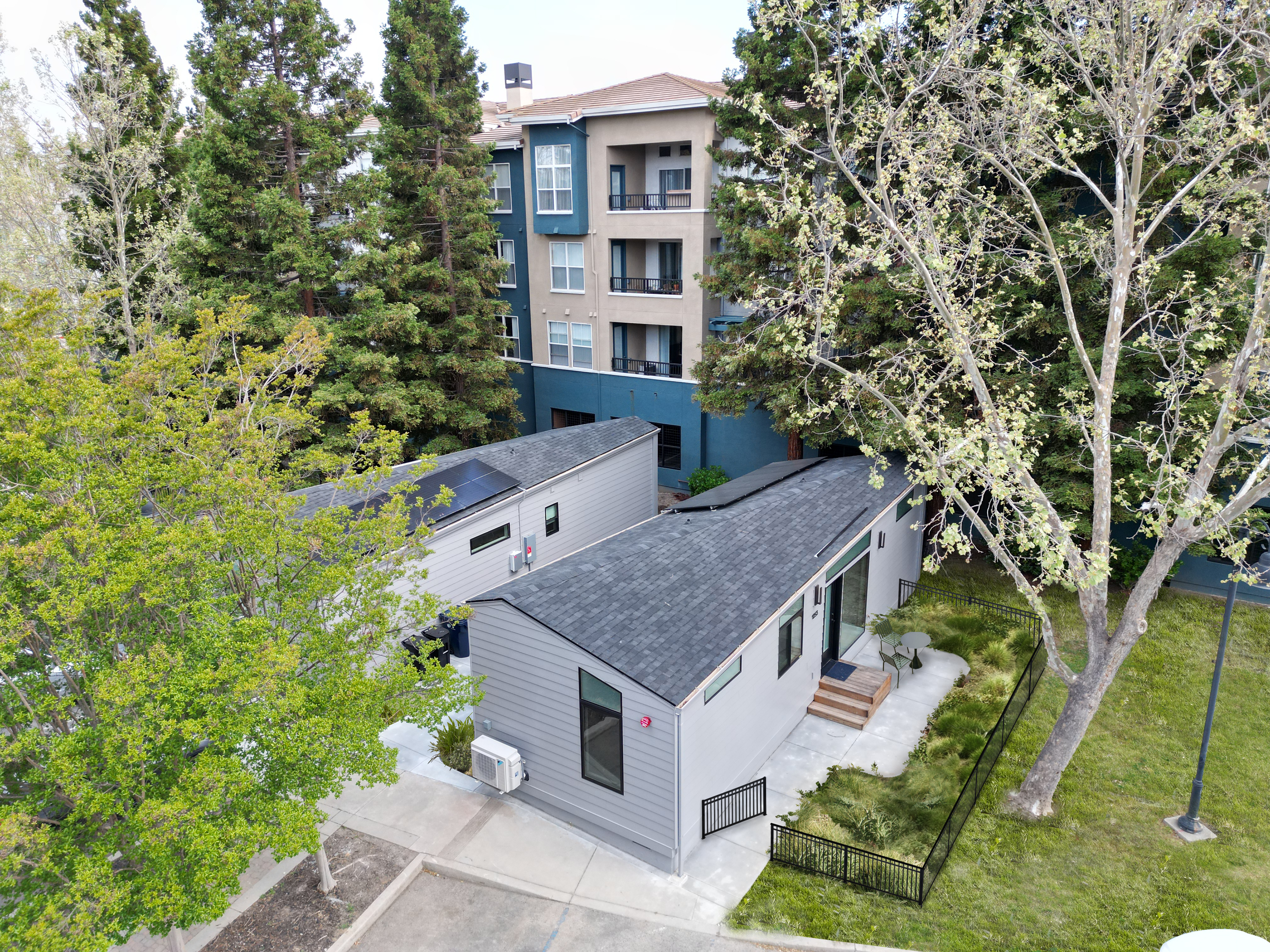
California multifamily operators have a rare opportunity sitting in their parking lots. Senate Bill 1211, effective January 1, 2025, expanded the number of detached ADUs that can be built at multifamily properties from 2 units to 8 units, and prohibited local governments from requiring replacement parking. For apartment owners with underutilized surface parking, that is a direct path to new revenue on land you already own.
This article breaks down exactly what SB 1211 allows, who qualifies, what the unit caps look like by property size, and how to move from feasibility to installation without getting stuck in local permitting delays.
What SB 1211 Actually Changed
Before SB 1211, California multifamily operators were limited to two detached ADUs per property under state law. Interior conversions of non-habitable space including storage rooms, boiler rooms, garages, and basements were permitted up to 25% of existing unit count, but new detached construction on the lot was capped at two.
SB 1211 authorizes up to 8 detached ADUs on a lot with an existing multifamily dwelling, provided the number of new ADUs does not exceed the number of existing units on the lot.
That last clause matters. A 6-unit building can add up to 6 detached ADUs, not 8. An 8-unit building can add up to 8. A 32-unit building is capped at 8 detached ADUs regardless of unit count, though interior conversions remain available at 25%.
SB 1211 also prohibits local governments from requiring replacement of surface parking spaces when existing parking is repurposed for ADUs. This is the provision that makes parking lot conversions feasible. Previously, operators who removed surface parking to build ADUs faced replacement parking requirements that killed the economics. That barrier is now gone statewide.
Who Qualifies Under SB 1211
SB 1211 applies to existing multifamily properties, meaning any lot with two or more existing dwelling units. This includes duplexes, triplexes, fourplexes, and apartment communities of any size. The bill was signed September 19, 2024 and took effect January 1, 2025.
To qualify for the full 8-unit allowance, your property needs:
- An existing multifamily dwelling with 8 or more units on the lot
- Sufficient lot area to meet setback and height requirements
- No active code violations that would block ministerial approval
Properties in the 2 to 7 unit range are capped at the number of existing units. A 4-unit building can add 4 detached ADUs. A 7-unit building can add 7.
The Unit Cap Table by Property Size
| Existing Units | Max Detached ADUs | Interior Conversions (25%) | Total Potential New Units |
|---|---|---|---|
| 2 (duplex) | 2 | 1 | 3 |
| 4 | 4 | 1 | 5 |
| 6 | 6 | 2 | 8 |
| 8 | 8 | 2 | 10 |
| 12 | 8 | 3 | 11 |
| 20 | 8 | 5 | 13 |
| 32+ | 8 | Up to 25% of units | 8 + conversions |
For most operators in the 8 to 32 unit range, 8 detached ADUs is the ceiling. The economics work best on properties with excess surface parking, where the land cost is already sunk and no acquisition is required.
Parking: The Rule That Changes the Math
The most consequential practical change in SB 1211 is the parking replacement prohibition. New ADU units can be built on existing uncovered parking areas without requiring those spots to be replaced.
This is what makes multifamily ADU projects pencil for operators who previously dismissed the idea. Surface parking in suburban California apartment communities is one of the most underutilized assets on the balance sheet. At typical suburban parking ratios of 1.5 to 2.0 spaces per unit, most properties carry excess parking they do not need.
Under prior rules, converting 8 parking spaces to 8 ADU pads required replacing those 8 spaces elsewhere on the lot, consuming land and cost that made the project unfeasible. SB 1211 eliminated that requirement entirely for surface parking. Covered parking structures require a separate analysis, but uncovered surface lots are now fully available for ADU development with no replacement obligation.
Setbacks, Height, and Design Standards Under SB 1211
SB 1211 preserves local authority over objective design standards, setbacks, and height limits. What it removes is discretionary review, variance requirements, and subjective criteria. No planning commission hearings. No design review boards. No neighbor notification. Ministerial approval only.
Key standards that still apply:
- Setbacks: 4-foot side and rear yard setbacks are standard under state ADU law. Front setback rules vary by jurisdiction.
- Height: Typically 16 to 18 feet for detached ADUs depending on local ordinance.
- Size: ADUs up to 1,200 square feet qualify. Studios, 1-bedrooms, and 2-bedrooms all permitted.
- Separation: Some jurisdictions require minimum separation between detached structures. Verify locally before finalizing site layout.
Permitting: What Ministerial Approval Means for Operators
Ministerial approval is the critical legal term in SB 1211. It means a local agency must approve a complete application without subjective judgment. There is no planning commission hearing, no public comment period, no conditional use permit.
For multifamily operators, this compresses the permitting timeline significantly compared to a traditional entitlement process. The local jurisdiction reviews for objective compliance with setbacks, height, and building code only. If the application is complete and compliant, approval is required by law.
For HCD-approved factory-built units, the timeline compresses further. Local jurisdictions cannot reject the building plans for an HCD-approved modular unit. The only local review remaining is foundation design, which is a ministerial technical check, not a discretionary approval. Combined with SB 543's 15-business-day completeness determination requirement, operators have a clear, predictable permitting runway.
How the Economics Work: 8% to 13% Yields on Land You Already Own
The financial case for SB 1211 projects is straightforward for operators who already own the land.
A typical 2-bedroom modular ADU in a California suburban market leases at $2,200 to $3,200 per month depending on location. At 8 units, that is $17,600 to $25,600 in gross monthly revenue added to an existing property. The capital cost per unit, including permitting, factory construction, crane installation, foundation, and utility connection, determines the yield.
At an 8% to 13% yield on cost, these projects outperform most value-add renovation strategies available to multifamily operators today, without tenant displacement, without new land acquisition, and without a lengthy entitlement process.
Key cost variables to underwrite:
- Unit cost: Varies by model (studio, 1-bed, 2-bed)
- Foundation: Soil conditions drive design; expansive soils and seismic zones increase cost
- Utility trenching: Distance from master panel and sewer cleanouts to unit locations is the primary site cost variable
- Crane: Multi-unit projects allow a single crane mobilization, spreading fixed cost across all units
- Volume pricing: Operators adding 4 to 8 units on one property qualify for project-based pricing
The crane cost structure deserves specific attention. Crane mobilization is a fixed cost regardless of how many units are installed in a single session. Operators adding 8 units pay one mobilization. Stacking the full unit count into a single installation event is the single biggest lever on total project cost.
What SB 1211 Does Not Cover
Important limits operators need to understand before committing to feasibility:
It does not override all local zoning overlays. Historic districts, coastal zones, and fire hazard severity zones may carry additional restrictions above the SB 1211 floor. Verify locally.
It does not apply to proposed multifamily developments. The 8-unit allowance requires an existing multifamily structure on the lot. Lots with proposed (not yet built) multifamily dwellings are limited to 2 detached ADUs.
It does not eliminate all fees. Impact fees are waived on ADUs under 750 square feet under existing state law. Units above 750 square feet may be subject to impact fees depending on jurisdiction.
Alameda County note: Some jurisdictions interpret SB 1211 more restrictively than the state minimum. Verify local ordinance compliance before committing to any project.
Why HCD-Approved Modular ADUs Are the Fastest Path Under SB 1211
SB 1211 creates the legal right to add units. It does not automatically make the construction process fast. The permitting clock starts when a complete application is submitted. Getting to a complete application with conventional construction requires architectural drawings, structural engineering, and a full plan set specific to that property, which typically takes 60 to 120 days before the permit clock even starts.
HCD-approved modular ADUs eliminate that step. The building plans are already state-approved. No local plan check on the structure. No architectural review. The only site-specific engineering required is the foundation design and utility connection drawings, which Abodu prepares as part of the project scope.
For multifamily operators running SB 1211 projects across multiple properties, this is a compounding advantage. Each property does not require a new architectural engagement. The same HCD-approved plans deploy across every site. Site-specific variables are limited to foundation and utilities, which Abodu documents during a site assessment before the project begins.
Factory production also runs concurrently with permitting. While the permit application is under review, the units are being built in the factory. By the time permits are issued, units are ready for delivery. That parallel process is not available with stick-built construction, where building cannot start until permits are in hand.
Abodu's Approach to SB 1211 Multifamily Projects
Abodu has installed over 450 units across 90+ California cities. The multifamily SB 1211 workflow follows a consistent process:
- Site assessment: Abodu maps unit placement, crane access, utility routing, and foundation requirements for the specific property.
- Feasibility output: Unit count, configuration mix, parking impact, and rough cost range delivered before any commitment.
- Permit filing: Abodu files the complete permit application using HCD-approved plans plus site-specific foundation drawings.
- Factory production: Units are built concurrently with permitting.
- Crane installation: All units installed in a single crane mobilization where site conditions allow.
- Utility connection: Abodu coordinates utility trenching and connection to existing infrastructure.
- Certificate of Occupancy: Units are ready to lease.
For operators adding 4 to 8 units on a single property, the full timeline from site assessment to leased unit runs as little as 8 months.
Frequently Asked Questions
How many ADUs can I add to my apartment property under SB 1211? Up to 8 detached ADUs, provided the number of new ADUs does not exceed the number of existing units on the lot. A 6-unit building can add up to 6. An 8-unit or larger building can add up to 8.
Do I have to replace parking spaces removed for ADU construction? No. SB 1211 prohibits local governments from requiring replacement of surface parking spaces removed for ADU construction. Covered parking structures require a separate analysis.
Does SB 1211 apply to properties in Alameda County or other restrictive jurisdictions? SB 1211 is state law and sets the minimum floor. Some jurisdictions have imposed local restrictions above the state minimum. Alameda County in particular has additional local rules. Always verify the local ordinance for your specific parcel before beginning feasibility.
How long does it take to permit and install ADUs under SB 1211? With HCD-approved modular units, the full timeline from site assessment to leased unit runs as little as 8 months. Conventional stick-built construction typically runs 14 to 24 months due to plan check timelines and sequential construction scheduling.
Can I mix unit types (studio, 1-bed, 2-bed) across my 8 ADUs? Yes. There is no requirement to use identical units. Operators can mix configurations to optimize for parking retention, rental yield, and site layout. Abodu's site assessment includes a recommended mix based on your specific property.
Ready to find out how many units your property can support under SB 1211? Schedule a free multifamily site assessment at abodu.com/realestatedevelopers and we will map out unit placement, parking impact, and cost range before you commit to anything.