How California's $10M Factory-Built Housing Program Works (And How to Apply)

Abodu
On February 6, 2026, Governor Newsom announced the next round of California's factory-built housing program, making $10 million available to accelerate modular and prefabricated housing across the state. The Round 3 Notice of Funding Availability is live. Applications open February 13, 2026, and close May 5, 2026. No competitor, trade publication, or housing blog has published a clear breakdown of who qualifies, what the money actually funds, and what this means for homeowners considering a factory-built home. This article fixes that.
What Is the California Factory-Built Housing Program?
The Factory-Built Housing Regional Pilot Program is administered by the California Strategic Growth Council (SGC). It is funded by a $12 million allocation from the Affordable Housing and Sustainable Communities (AHSC) Program, which draws from California's Greenhouse Gas Reduction Fund, part of the state's broader California Climate Investments initiative.
The program's stated goal: support regional strategies that use factory-built housing to expand the supply of affordable, high-quality homes across the state. Round 3 was specifically highlighted by Governor Newsom in the context of LA fire recovery, with the Governor noting that local agencies have already approved 3,000 rebuilding permits at roughly three times the speed of pre-fire permitting.
This is not a one-off grant. The SGC redesigned the program in April 2025 after Rounds 1 and 2 failed to make any awards. The original program was narrowly scoped to support manufacturers seeking federal Department of Energy funding. Round 3 removes that restriction entirely and refocuses on regional deployment of factory-built housing units, not just manufacturing facility development.
Who Can Apply for the $10M Factory-Built Housing Grant?
This is where most coverage gets it wrong, so let's be direct: individual homeowners cannot apply for this grant. The program funds organizations building regional factory-built housing strategies.
Eligible Applicants
Eligible lead applicants include nonprofits, public agencies (cities, counties, regional bodies), tribal governments, and other legal entities. Every lead applicant must be based in or operating in California, authorized to hold public funds, and able to demonstrate financial and operational capacity. They must also show a track record of or commitment to factory-built housing and innovative affordable housing solutions.
Eligible Geographies
The project area must be located in California and cover at least one county or two local jurisdictions. Applicants define their own regional boundaries based on shared infrastructure, climate risks, or economic systems. This is designed to encourage multi-city and county-wide strategies rather than single-lot projects.
No Matching Funds Required
Neither grant type requires matching funding, which is a significant advantage for smaller organizations and local governments that may not have capital reserves to pledge against the award.
Two Grant Types: Catalyst and Planning
The program offers two distinct grant tracks. Choose the wrong one and your application fails at threshold review.
Catalyst Grants (Up to $500,000, 2-Year Term)
Catalyst Grants fund early-stage work: research on regulatory barriers, market studies to assess regional demand, convening stakeholders to form cross-jurisdictional coalitions, and developing preliminary roadmaps for future factory-built housing projects.
These are designed for organizations that are new to factory-built housing or building early partnerships. If your region has not yet conducted a formal study on how factory-built housing fits into local housing plans, a Catalyst Grant is the right starting point.
Planning Grants (Up to $3 Million, 3-Year Term)
Planning Grants fund more advanced work: amending local policies to streamline permitting, conducting in-depth market analyses, identifying feasible sites, advancing predevelopment work, designing regional financing tools, and implementing regulatory reforms.
To qualify for a Planning Grant, applicants must demonstrate they have moved past early-stage activities and possess the legal authority, capacity, and established partnerships needed to deliver actionable plans or frameworks. Applications go through a more rigorous scoring process, including a one-hour interview with SGC and an interagency review panel.
Key Dates and Deadlines (As of February 2026)
Here are the dates that matter:
February 5, 2026: NOFA released
February 13, 2026: Applications open for both Catalyst and Planning Grants
February 18, 2026: Weekly SGC office hours begin (every Wednesday, 2:00 to 3:00 PM PST)
April 17, 2026: Deadline to request free technical assistance from SGC (email factorybuilthousing@sgc.ca.gov with subject line "FBH Round 3 Technical Assistance Request")
May 5, 2026: Application deadline
Second half of 2026: Awards announced
The technical assistance is worth flagging. SGC is offering free, no-cost TA to help applicants develop competitive proposals. That is unusual for a state grant program and suggests SGC wants to avoid the outcome from Rounds 1 and 2, where zero awards were made.
What This Means for Homeowners
If you are a homeowner in Altadena, Pacific Palisades, Malibu, or another fire-affected area, this program will not write you a check. But it directly affects your rebuilding options in two ways.
First, it funds the organizations and local governments that create the policies, permitting pathways, and infrastructure that make factory-built housing accessible in your area. When a county government receives a Planning Grant to streamline modular permitting, that translates to faster approvals for your project.
Second, it signals the state's long-term commitment to factory-built housing as a core rebuilding strategy. Governor Newsom's February 6 announcement specifically highlighted modular homes already completed in Altadena and the Palisades, with families moving back onto their properties months ahead of conventional stick-built timelines.
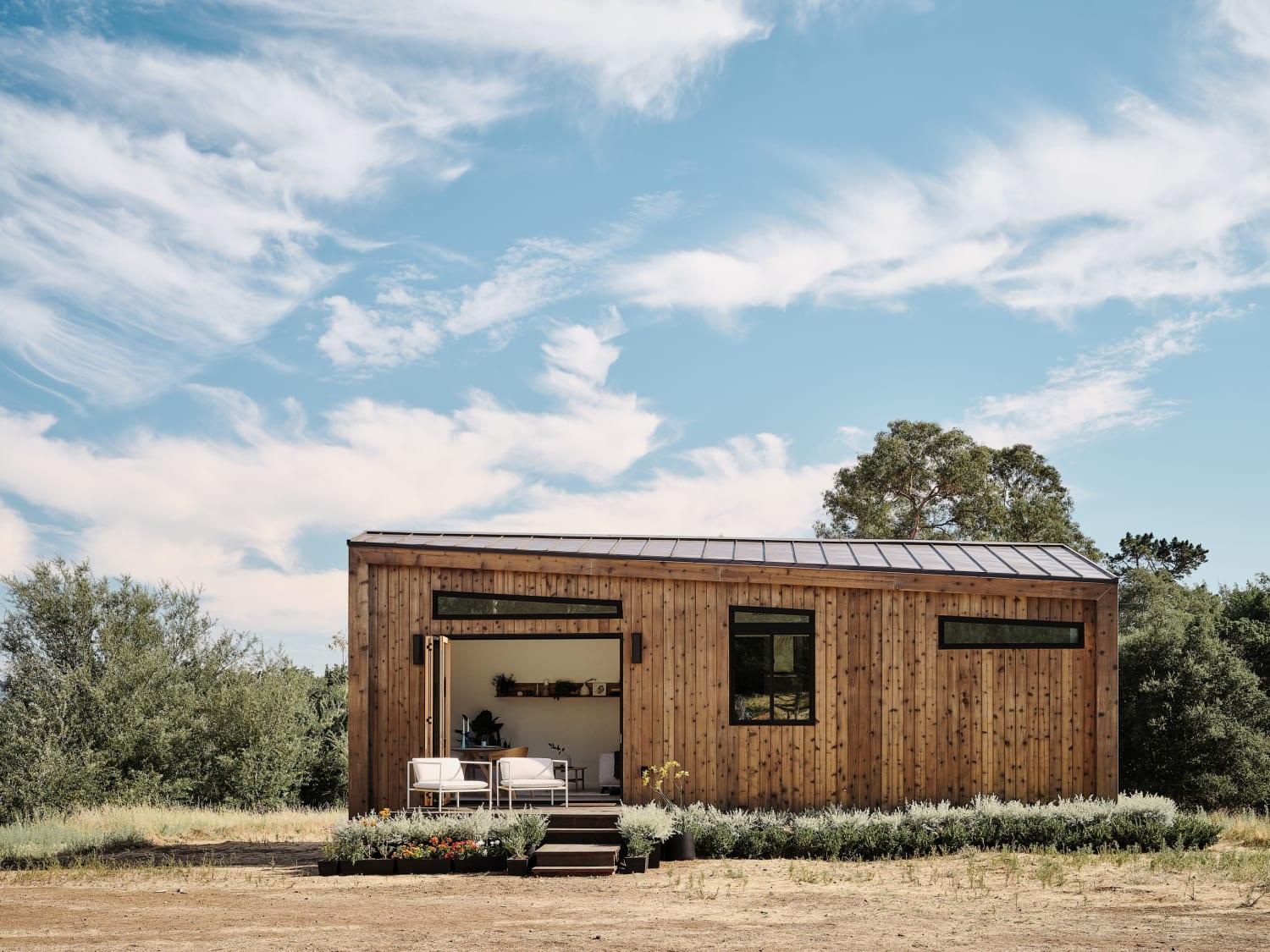
For homeowners who are ready to act now, the fastest path is not waiting for grant funding to flow. The fastest path is choosing an HCD state-approved manufacturer whose units can use the existing state permitting pathway. Abodu's factory-built ADUs already qualify for 10-day permit decisions under AB 818 in emergency-declared areas. AB 462 allows an ADU to receive a Certificate of Occupancy before the primary dwelling is rebuilt, so families can return to their property while the main home is still under construction.
What This Means for Developers, Nonprofits, and Local Governments
If you are a housing developer, nonprofit, or local government official, this is a direct funding opportunity. The program is explicitly designed for organizations serving LA fire survivors, as stated in the Governor's February 6 announcement: "Companies and non-profits developing factory-built housing solutions in Los Angeles are encouraged to apply, as well as local governments, tribes, nonprofits, and regional partners."
The Catalyst Grant track is the lower-risk entry point. For $500,000, a regional coalition of two or more jurisdictions can conduct market studies, convene stakeholders, and build the roadmap for factory-built housing deployment. No matching funds required.
Abodu partners with local governments and developers on turnkey modular ADU installation, providing HCD state-approved plans, permitting coordination, and single-day installation. If your organization is applying for this grant and needs a factory-built housing partner with an established production and permitting track record in California, contact our team.
Frequently Asked Questions
Can individual homeowners apply for the $10M factory-built housing grant?
No. The program funds organizations, not individual homeowners. Eligible applicants include nonprofits, public agencies, tribal governments, and other legal entities. Homeowners benefit indirectly through faster permitting, expanded housing options, and local programs funded by these grants.
When do applications open for the Factory-Built Housing Program Round 3?
Applications open February 13, 2026. The deadline to submit is May 5, 2026. Award announcements are expected in the second half of 2026.
What is the difference between a Catalyst Grant and a Planning Grant?
Catalyst Grants fund early-stage activities (research, stakeholder convening, market studies) for up to $500,000 over two years. Planning Grants fund advanced work (policy reforms, predevelopment, regional strategies) for up to $3 million over three years. Planning Grant applicants go through an additional interview process and must demonstrate established partnerships and legal authority.
How does the Factory-Built Housing Program relate to fire rebuilding in LA?
Governor Newsom specifically connected this program to LA fire recovery in his February 6, 2026 announcement. The program funds regional strategies that deploy factory-built housing, and LA-area organizations serving fire survivors are encouraged to apply. Factory-built homes compress rebuild timelines from years to months.
Does this grant require matching funds?
No. Neither the Catalyst Grant nor the Planning Grant requires matching funds, which makes this program accessible to smaller organizations and local governments.
If you are a homeowner ready to rebuild or add an ADU, you do not need to wait for this grant cycle. Abodu's HCD state-approved modular homes are available now with 10-day permitting under AB 818 in fire-affected areas. Schedule a free site assessment or configure your Abodu to get started.
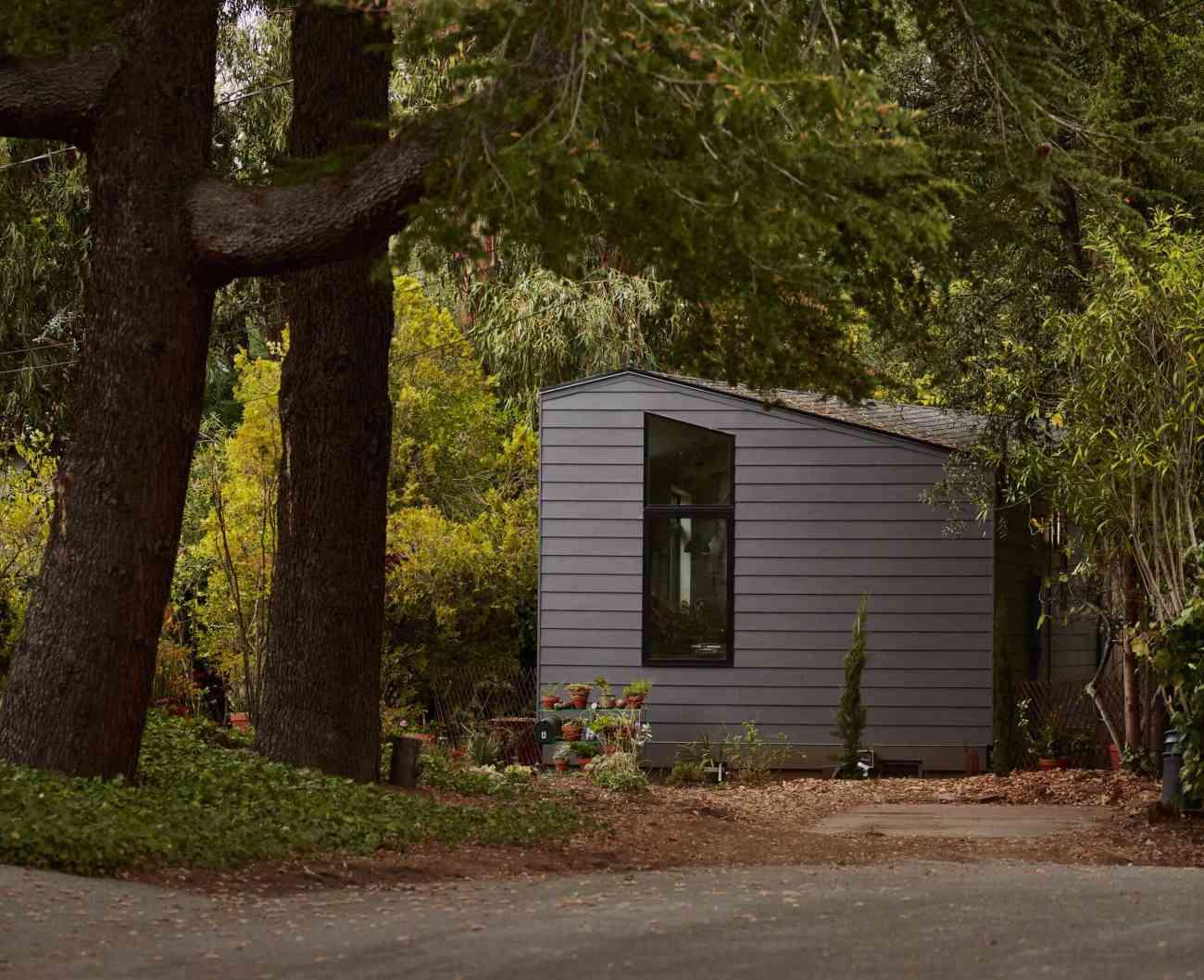
Abodu One in the woods.
Contact Abodu to help you build your ADU in California.

All-in-One Service
Featuring an impressive selection of pre-approved plans, Abodu streamlines the process of building and installing premium built-to-order ADUs.
Unparalleled Design
Each floor plan showcases timeless designs using sustainable, high-quality materials—all with upfront pricing.
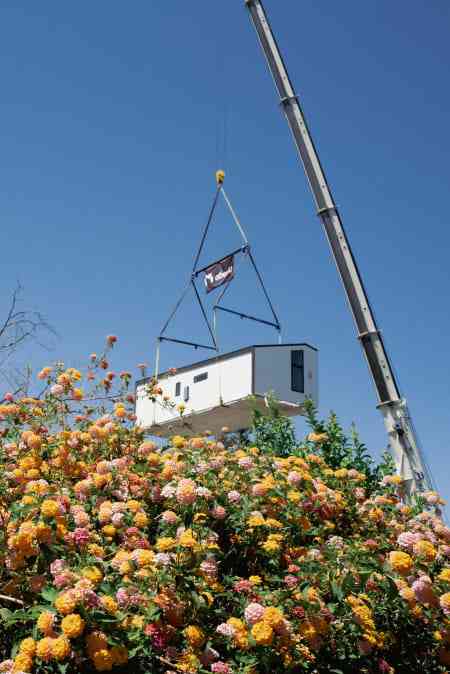
Hassle-Free
We're committed to delivering a straightforward, hassle-free experience including project management, permitting, and construction. Enjoy your Abodu as soon as nine months after signing on the dotted line.
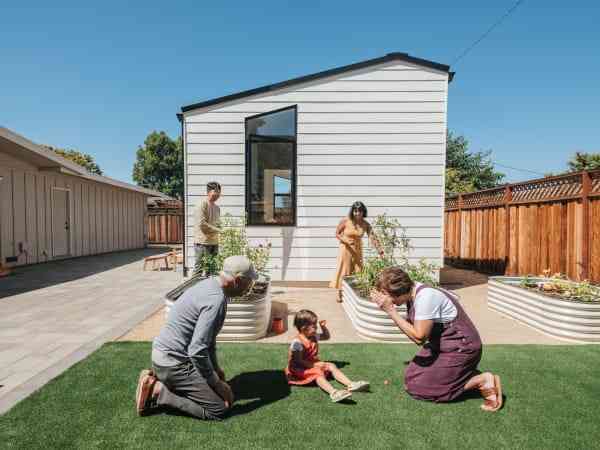
A Great Investment
Take advantage of an exceptional return on investment with an Abodu ADU.
Get your free ADU assessment.
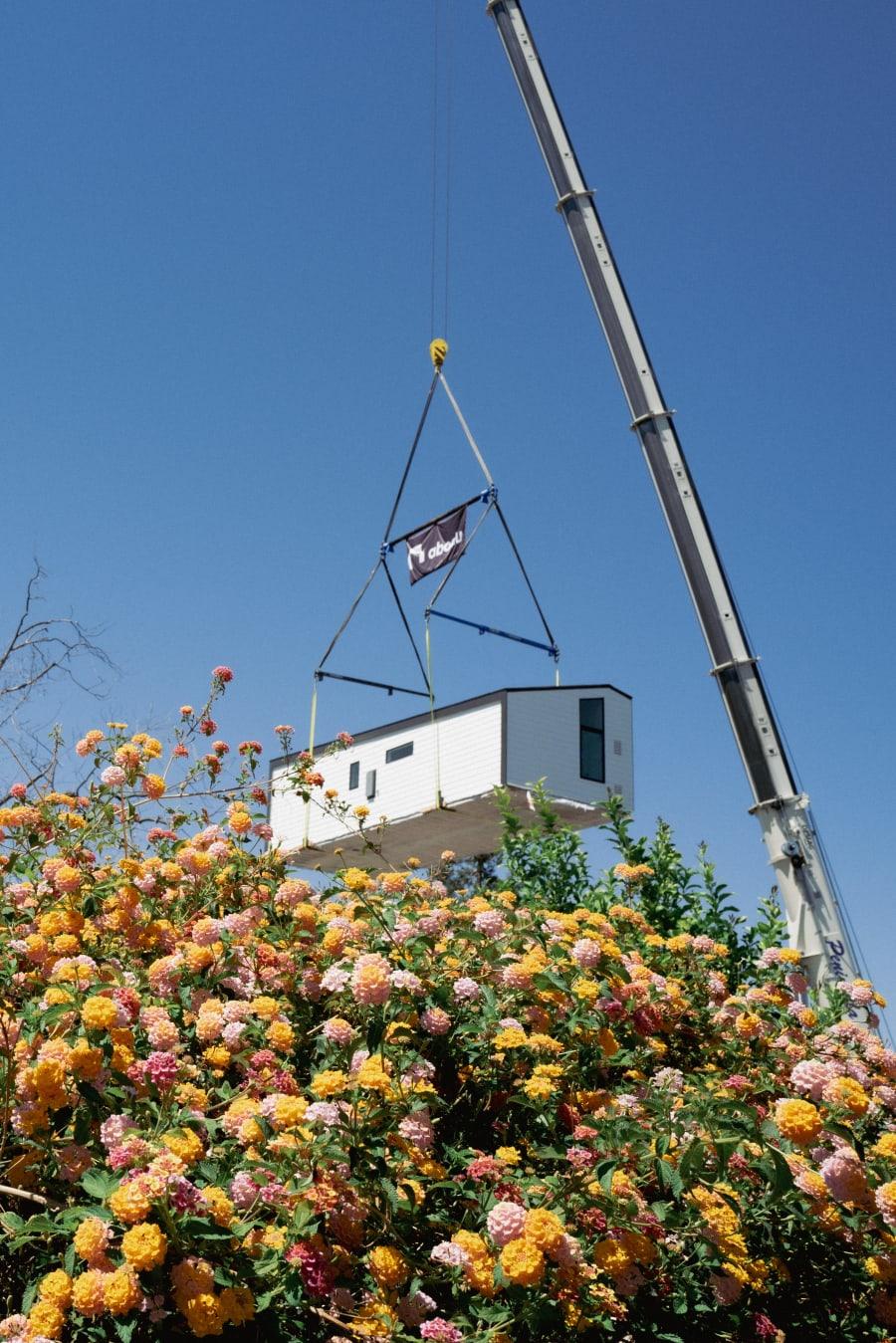
We'll handle the permits.
Delivered in as little as 6 months.
No hassle installation.
Expand your home’s value and livable space.
Find your new Abodu.